
No products in the cart.
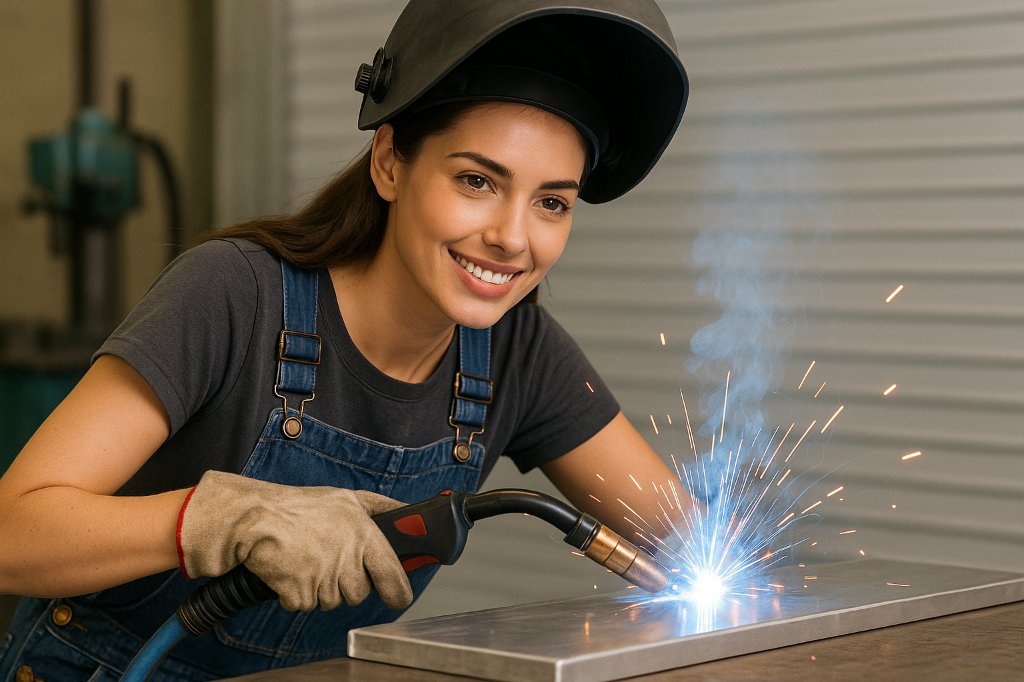
Can You Weld Aluminium With Mig Welder for Professional-Grade Finishes and Durable Metal Projects
Welding aluminium has always been seen as a challenge even for experienced welders, and many often wonder — can you weld aluminium with MIG welder effectively without compromising strength or appearance? The truth is that aluminium behaves very differently from steel or other common metals, making it sensitive to technique, settings, and preparation. However, with the right knowledge, tools, and adjustments, MIG welding can produce excellent, clean, and strong aluminium welds suitable for professional-grade projects.
Aluminium’s lightweight structure and natural corrosion resistance make it a preferred choice in automotive, construction, and aerospace industries. Yet, these same properties that make it valuable also make it tricky to weld. Its thermal conductivity and oxide layer create a barrier between the filler metal and the base, meaning every aspect of the welding process — from cleaning to gas choice — matters immensely.
Before delving into techniques, understanding how aluminium differs from steel and what special preparations are required is crucial. This foundational understanding is the key to unlocking quality results when MIG welding aluminium.
Why Aluminium Welding Requires Special Techniques
Unlike mild steel, aluminium has a melting point around 660°C, which is significantly lower than most metals used in fabrication. This lower melting temperature, combined with its high thermal conductivity, means aluminium absorbs and dissipates heat rapidly. If a welder uses the same parameters as steel, it can lead to warping, burn-through, or cold welds.
Additionally, aluminium’s surface oxide layer melts only at around 2000°C, far above its own melting point. That means this oxide must be removed before and during welding. Otherwise, the molten filler metal won’t properly fuse with the base metal. This is why cleaning with a stainless-steel brush and using proper shielding gas is critical.
Another challenge is aluminium’s softness. Feeding aluminium wire through a traditional MIG setup without proper components often results in bird-nesting — a tangle of wire at the drive rolls — or inconsistent feed rates. Therefore, specific accessories like spool guns and Teflon liners become essential.
Understanding MIG Welding Basics for Aluminium
MIG welding, or Metal Inert Gas welding, uses a continuous wire electrode fed through a welding gun. Shielding gas protects the molten weld pool from contamination. While MIG is often associated with steel, its versatility extends to aluminium when paired with the right setup.
For aluminium, pure argon gas is commonly used as the shielding gas. Its inert properties prevent oxidation during welding and promote smoother bead formation. Helium or argon-helium blends can also enhance penetration for thicker sections.
Aluminium wire is softer and more prone to kinking, so a spool gun or push-pull system ensures a consistent wire feed. Standard steel drive rollers can damage the soft wire, so smooth U-groove rollers are preferred.
Proper voltage, amperage, and wire feed speed settings depend on the metal thickness and the welder’s capacity. A detailed aluminum MIG welding settings chart helps fine-tune parameters for optimal performance.
Essential Preparations Before MIG Welding Aluminium
Before welding aluminium, thorough preparation is critical. Skipping any of these steps often leads to poor-quality welds or structural weaknesses.
Cleaning and Oxide Removal
The first step is to remove the oxide layer using a dedicated stainless-steel wire brush. Never use the same brush for steel and aluminium, as cross-contamination can lead to corrosion and impurities in the weld. After brushing, wiping the surface with acetone removes oil and contaminants.
Setting Up the Welder
Adjust the welder’s polarity to DCEP (Direct Current Electrode Positive). This polarity provides better cleaning action and penetration. Always ensure the wire feed system is clean and free of dust or debris.
Choosing the Right Wire
Select aluminum MIG wire designed specifically for the alloy being welded, such as ER4043 or ER5356. ER4043 is known for better flow and appearance, while ER5356 offers higher strength and crack resistance.
Using the Right Shielding Gas
Pure argon is the most common choice for thin to medium aluminium thicknesses. For thicker materials, an argon-helium mix improves penetration.
Managing Heat Input
Because aluminium dissipates heat quickly, start with higher voltage and wire feed settings than for steel. Keep travel speed steady to avoid excessive heat buildup.
Selecting the Right Equipment for MIG Aluminium Welding
Not every MIG welder is ideal for aluminium work. A standard machine may lack the necessary power output or feeding precision. For the best results, opt for welders with adjustable voltage and amperage control, and compatibility with spool guns.
When considering performance and reliability, resources such as the Hobart welder and generator power performance guide provide insights into selecting machines that can handle the specific power demands of aluminium welding.
The power source should maintain a steady arc even at high currents. Inconsistent power leads to porous or uneven welds. Additionally, a smooth feed mechanism and proper gun setup drastically improve bead quality and reduce spatter.
Techniques to Achieve Smooth Aluminium Welds
MIG welding aluminium demands precision, control, and consistent technique. Small adjustments in angle or travel speed can significantly affect the final weld quality.
Maintain Correct Torch Angle
Keep the torch at a 10–15° push angle. Pushing the gun allows better visibility, cleaning action, and gas coverage compared to pulling.
Control the Travel Speed
Move the torch at a steady pace. Too slow causes excessive heat buildup and sagging welds, while too fast leads to lack of fusion.
Avoid Overlapping Passes
When working with thicker aluminium, use multiple passes instead of a single deep weld. This helps maintain even penetration without overheating the metal.
Keep Short Wire Stick-Out
A stick-out distance of ⅜ to ½ inch ensures stable arc performance and effective shielding. Longer stick-out distances cause poor gas coverage and oxidation.
Practice on Scrap Aluminium
Before starting an important weld, practice on scrap pieces to refine technique and adjust parameters. Aluminium behaves differently from steel, so pre-practice saves costly mistakes.
Adjusting MIG Settings for Aluminium
Fine-tuning the settings is one of the most crucial aspects of aluminium MIG welding. Voltage, wire feed speed, and travel speed all directly influence penetration and bead appearance.
Thicker metals require higher voltage and slower travel speed. Thinner sheets, however, need lower voltage and higher travel speed to prevent burn-through. Referencing a trusted aluminum MIG welding settings chart helps achieve the perfect balance for each specific job.
For example:
1/16-inch aluminium: 18–20 volts, 150–180 IPM wire speed
1/8-inch aluminium: 20–22 volts, 200–230 IPM wire speed
1/4-inch aluminium: 23–25 volts, 300+ IPM wire speed
Adjustments depend on machine type, wire diameter, and shielding gas flow. Testing on a sample piece before production work ensures consistent results.
Comparing MIG Welding to Other Aluminium Welding Methods
While MIG welding is versatile and fast, it’s not the only method for joining aluminium. TIG welding and stick welding also have their advantages and limitations.
If you’re exploring alternatives, you might ask — can you weld aluminum with a stick welder? Technically yes, but the results are usually rougher and less consistent. Stick welding lacks the precise control and cleanliness that MIG offers, making it better suited for heavier or non-aesthetic applications.
For those wondering can you weld aluminum with flux core, the short answer is no. Flux-core wires designed for steel don’t work with aluminium. They produce contaminated welds because aluminium requires inert gas protection.
MIG welding remains the most efficient method for long, continuous welds where productivity and good appearance matter.
Key Equipment and Consumables
Every component of the setup impacts weld quality. Below are essentials for optimal performance.
Spool Gun – Prevents wire feeding issues by keeping the wire close to the gun.
Shielding Gas – Use pure argon or argon-helium mix.
Filler Wire – ER4043 for smooth flow, ER5356 for strength.
Wire Feed Rollers – Use U-groove rollers to protect the soft aluminium wire.
Contact Tips – Use larger size tips to prevent jamming as aluminium expands more than steel when heated.
Without these correct tools, weld consistency and integrity drop significantly.
Understanding Common Problems and Fixes
Aluminium MIG welding introduces unique challenges that can frustrate even seasoned welders. Recognizing problems early saves time and material.
Bird-Nesting
Occurs when the wire tangles near the drive roll. Prevent it by using a spool gun or push-pull setup and ensuring the wire path is smooth.
Porosity
Caused by contamination or inadequate shielding gas. Always clean the base metal and ensure gas coverage remains stable throughout the weld.
Cracking
Results from using incompatible filler wire or rapid cooling. Choosing proper wire and preheating thicker sections help prevent this issue.
Cold Welds
A sign of insufficient heat or travel speed too fast. Increase voltage slightly and slow your pace to achieve full penetration.
Fine-Tuning Arc Stability and Bead Appearance
Stable arcs create consistent bead appearance and structural integrity. Keep the torch at a uniform distance and avoid excessive weaving. Straight-line passes produce cleaner, stronger welds.
Avoid pausing too long at the end of a bead to prevent crater cracks. Instead, taper off slowly while maintaining shielding gas coverage. For larger projects, alternating between sections allows even cooling and minimizes distortion.
How to Convert a MIG Welder to Weld Aluminium
For welders who already own a MIG machine primarily used for steel, it’s possible to adapt it for aluminium work. Understanding how to convert a MIG welder to weld aluminum involves a few hardware and setup changes:
Replace the liner with a Teflon or nylon liner to reduce friction.
Switch drive rolls to U-groove rollers designed for soft wire.
Install a spool gun for better wire feeding control.
Use argon gas for shielding instead of CO₂ or argon mixes used for steel.
Select aluminium wire of the right diameter, usually 0.030” or 0.035”.
These changes make a significant difference in feed consistency and arc stability.
Can You Use a Regular MIG Welder to Weld Aluminium?
You might ask, Can you use a regular MIG welder to weld aluminum? The answer depends on the machine’s specifications. Many entry-level MIG welders can handle thin aluminium sheets if equipped with a spool gun and correct gas setup. However, heavy-duty welding requires higher amperage models capable of sustained output.
Strength and Durability of MIG Aluminium Welds
One question frequently discussed in fabrication shops is, “Is MIG welding aluminium strong?” When executed properly with the right filler metal, clean surfaces, and controlled heat, MIG welds on aluminium can achieve strength close to the base metal itself. Proper joint design and penetration depth ensure structural reliability for automotive panels, trailers, or architectural frameworks.
Learning Curve and Practice Requirements
Beginners often wonder, “How hard is it to learn to MIG weld aluminum?” While the learning curve is steeper than for steel, consistent practice improves results quickly. Starting with scrap pieces, observing puddle behavior, and experimenting with different travel speeds are effective methods to develop control.
Key Considerations for Wire Type and Compatibility
Using the correct aluminum MIG wire is crucial for weld integrity. Mismatched filler and base alloys lead to weak joints and cracking. Always verify compatibility — for example, 6061 aluminium works best with ER5356 wire due to its magnesium alloy composition.
For those curious, “Can you MIG weld aluminum with steel wire?” the answer is no. Steel wire and aluminium cannot fuse properly; it causes brittle joints and contamination. Always use wires formulated for aluminium alloys only.
Importance of Shielding Gas
Shielding gas determines weld clarity and cleanliness. A frequent question, “What gas do you need to weld aluminum with a MIG welder?” is straightforward: pure argon provides the best results. For thicker materials, adding helium enhances penetration. Maintaining 20–30 CFH (Cubic Feet per Hour) gas flow ensures adequate coverage.
Mistakes to Avoid When MIG Welding Aluminium
Many issues stem from rushing or skipping steps. Some of the most common mistakes include:
Not cleaning oxide thoroughly.
Using CO₂ gas meant for steel.
Selecting the wrong wire alloy.
Overheating thin materials.
Neglecting to adjust settings per thickness.
Each mistake directly affects weld quality, so patience and preparation matter.
The Role of Spool Guns and Feed Systems
Do you need a spool gun to MIG weld aluminum? Technically, yes. It eliminates wire feeding issues by keeping the soft wire close to the contact tip. Standard MIG torches push wire over several feet, which often causes tangling or kinks. For occasional aluminium work, a spool gun is the most practical upgrade.
Disadvantages of MIG Welding Aluminium
While MIG offers speed and efficiency, it’s not ideal for all situations. Some disadvantages include:
Limited precision compared to TIG.
High heat input can cause distortion on thin sheets.
Requires dedicated setup changes from steel.
Despite these, MIG welding remains the preferred choice for production environments due to its high deposition rate and speed.
Balancing Thickness and Technique
Another key factor is understanding what thickness of aluminum can you MIG weld. Typically, MIG welding works best on materials 14 gauge and thicker. For thinner sheets, pulsed MIG or TIG methods are recommended to prevent warping.
For welders who often switch between thin and thick materials, dual-mode welders or pulse-capable machines provide flexibility and precision.
Final Thoughts on Mastering Aluminium MIG Welding
So, Can You Weld Aluminium With Mig Welder successfully and achieve strong, beautiful welds? Absolutely — with the right preparation, equipment, and practice. From selecting suitable filler wires to fine-tuning machine settings, every detail contributes to weld quality.
Understanding the metal’s properties, controlling heat input, and maintaining a clean work environment ensure durability and appearance. Aluminium MIG welding may seem challenging initially, but once mastered, it opens endless possibilities in fabrication, automotive repair, and custom metalwork.
Mastering these techniques empowers both beginners and professionals to expand their capabilities confidently. Welding aluminium with a MIG setup is not just possible — it’s a powerful skill that defines craftsmanship and precision in modern metal fabrication.
Frequently Asked Questions (FAQs)
Q1. How to set up a MIG welder for aluminium?
Set up your MIG welder for aluminium by using a spool gun, 100% argon gas, and ER4043 or ER5356 wire. Switch polarity to DCEP (direct current electrode positive), clean the aluminium surface with a stainless steel brush and acetone, and push the torch at a 10–15° angle for cleaner results. Adjust the voltage and wire feed according to the metal thickness.
Q2. What is the best MIG welder for aluminum?
The top-rated MIG welders for aluminum include the Miller Millermatic 211, Lincoln Power MIG 210 MP, and Hobart Handler 210MVP. They feature stable arcs, spool gun compatibility, and precise control for high-quality aluminium welds.
Q3. Does Harbor Freight sell aluminum welders?
Yes, Harbor Freight sells several aluminum-capable MIG welders such as the Titanium MIG 170 and Vulcan MIGMax 215. These machines support spool guns and are ideal for small to medium aluminium projects.
Q4. How do you prepare aluminum for MIG welding?
Clean the surface with acetone to remove grease, then scrub with a dedicated stainless steel brush to remove the oxide layer. Always clean right before welding, as aluminium oxidizes quickly when exposed to air.
Q5. Do you need flux to weld aluminum?
No, flux is not required in MIG welding aluminium because shielding gas (argon) protects the weld from oxidation. Flux is used in flux-core or stick welding, not in MIG for aluminium.
Q6. Should you push or pull aluminum MIG?
Always push the torch when welding aluminium with MIG. Pushing provides better gas coverage, reduces soot, and improves weld appearance. Pulling can cause contamination and poor fusion.
Q7. What type of wire is used for MIG welding aluminum?
The most common wires are ER4043 and ER5356. ER4043 gives smoother welds and easier feeding, while ER5356 offers higher strength and is better for structural applications.
Q8. Why are my aluminum MIG welds black?
Black welds usually occur due to poor gas coverage, contamination, or pulling instead of pushing. Use 100% argon, clean the surface thoroughly, and maintain proper torch angle and distance.
Q9. What gas do I need to MIG weld aluminum?
Use 100% pure argon gas for MIG welding aluminium. It provides excellent shielding, prevents oxidation, and ensures strong, clean welds. Avoid CO₂ or mixed gases as they cause porosity.
Q10. Can I use JB Weld on aluminum?
Yes, JB Weld can bond aluminium surfaces effectively for non-structural repairs. However, it cannot replace actual welding for strength or load-bearing purposes.
Q11. What filler rod is used for aluminum welding?
For aluminium MIG welding, ER4043 and ER5356 are the standard filler materials. Choose ER4043 for general-purpose use and ER5356 when higher strength and ductility are required.
Q12. Why can’t you weld aluminum with MIG?
You actually can, but aluminium is more difficult because it’s soft, oxidizes easily, and requires a special setup. Without a spool gun and argon gas, the wire can jam or burn back.
Q13. What type of MIG wire do you use to weld aluminum?
Use ER4043 for most aluminium jobs due to its smooth flow, or ER5356 for tougher welds that need extra strength. Make sure your welder supports soft aluminium wire.
Q14. What gas do you need to weld aluminum with a MIG welder?
You must use 100% argon shielding gas when welding aluminium with a MIG welder. It ensures proper arc stability and prevents oxidation during the weld.
Q15. Do you need a special welder to weld aluminium?
Not always. Most standard MIG welders can handle aluminium if they support a spool gun and have enough amperage capacity. You just need the right accessories and setup.
Q16. How hard is it to MIG weld aluminum?
It’s moderately difficult because aluminium melts quickly and conducts heat fast. Once you understand the proper settings and maintain clean surfaces, it becomes much easier to master.
Q17. What setting should a MIG welder be on for aluminum?
Settings depend on metal thickness. For 1/8″ aluminium, use 20–24 volts and 250–350 inches per minute wire feed. Always fine-tune based on your specific welder chart.
Q18. Is MIG or TIG better for aluminum?
TIG gives cleaner, more precise welds and is preferred for thin materials. MIG is faster and better suited for thicker aluminium. The choice depends on your project type.
Q19. How to set up a MIG welder for aluminium?
Use a spool gun, load ER4043 wire, and connect pure argon gas. Clean the aluminium thoroughly, select DCEP polarity, and test your weld on scrap metal before the actual job.
Q20. What is the best MIG welder for aluminum?
Top models include the Miller Millermatic 211, Hobart Handler 210, and Lincoln Electric 210MP. They are durable, easy to operate, and deliver professional aluminium welds.
Q21. What are the disadvantages of MIG welding aluminum?
Disadvantages include risk of burn-through, wire feed issues, and porosity if not properly shielded. Aluminium also requires meticulous cleaning and correct settings for best results.
Q22. Can you weld aluminum with a regular MIG gun?
You can, but it’s not ideal. A regular MIG gun struggles to feed soft aluminium wire. A spool gun or push-pull gun ensures smoother feeding and consistent results.
Q23. What does MIG stand for?
MIG stands for Metal Inert Gas welding. It’s also known as Gas Metal Arc Welding (GMAW), using a continuous wire electrode and shielding gas to create strong joints.
Q24. Does Tractor Supply sell welding gas?
Yes, Tractor Supply sells welding gases like argon, CO₂, and mixed blends. You can purchase or exchange cylinders at many of their store locations.
Q25. Can You Weld Aluminium With Mig Welder?
Yes, you can weld aluminium with a MIG welder if you use the correct wire, 100% argon gas, and a spool gun. Clean preparation and right settings make all the difference.

Related posts
Lincoln Electric Welder Online Store: Where to Buy Lincoln Electric Welders in 2026 If you are looking for a Lincoln Electric welder online store, choosing... Continue reading
Lincoln Electric Welding Helmet: Complete Buying Guide for 2026 Choosing the right welding helmet is one of the most important decisions a welder can make.... Continue reading
In the world of fabrication, repair, and heavy-duty construction, the need for consistent power and efficient welding capability is non-negotiable. Professionals and enthusiasts alike understand... Continue reading

In the world of heavy-duty construction, fabrication, and field repair, professionals often face one recurring challenge — the need for portable, consistent power and reliable... Continue reading
Add comment